
Dry Food vs Wet Food for Dogs: Which Is Better?
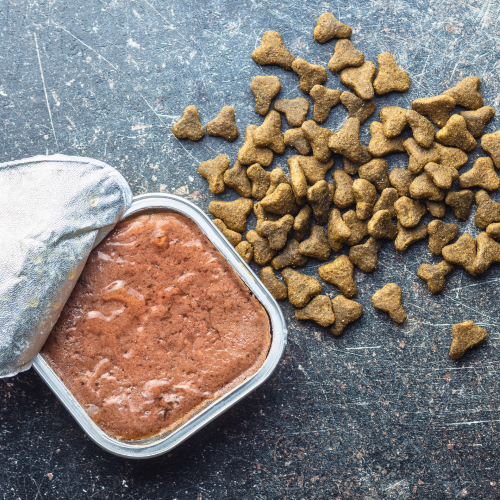
The “best” food isn’t a format — it’s whether it meets your dog’s needs
“Is wet food better than dry?” is one of the most common questions I hear — and it’s usually asked with a lot of guilt attached.
So let’s clear this up straight away:
There is no universally “better” format. The better choice is the one that’s nutritionally adequate, safe, appropriate for your dog’s life stage and health, and realistic for you to feed consistently.
Both wet and dry foods can be complete and balanced. Both can also be poorly formulated, unsuitable for your dog, or fed incorrectly. The trick is learning what actually matters (and what’s just marketing noise).
In this blog, we’ll break down:
what the real differences are between wet and dry
when one format can be genuinely helpful
common myths (hydration, teeth, “processed” panic)
how to compare labels properly (without being tricked by moisture)
how to make the best choice for your dog and your budget
What counts as “dry” and “wet” food?
Most of the time:
Dry food (kibble) is usually around 8–12% moisture.
Wet food is typically 60–84% moisture (pouches, cans, trays).
This moisture gap drives many of the practical differences: portion sizes, calorie density, cost per calorie, storage, and how “filling” the meal feels.
Industry definitions also reflect this water split (e.g., wet food ≥60% moisture).
The only question that really matters first: is it complete and balanced?
Before we talk hydration, teeth, or cost — we have to talk adequacy.
A food can be:
Complete (meets nutrient requirements for a life stage or health condition when fed as directed)
Complementary (a topper, mixer, treat, or “not complete” product that must be combined with other foods)
If your dog is eating complementary wet food as the “main diet” (or you’re mixing multiple foods without balancing), you can accidentally create nutrient gaps over time — regardless of how premium it looks.
Look for a nutritional adequacy statement aligned with recognised standards:
In Europe/UK, many brands formulate to FEDIAF nutrient guidelines.
In the US, “complete and balanced” is commonly tied to AAFCO profiles/feeding trials.
Veterinary teams often recommend using practical selection frameworks like the WSAVA toolkit when choosing reputable brands.
(If you want a step-by-step on decoding labels, guaranteed analysis, and what matters most, see “What Should I Feed My Dog” E-book on my site. )
Comparing wet vs dry nutrition: the “water factor” that confuses everyone
A common mistake is comparing the label as-fed:
Wet food might show 4% fat and look “low fat”
Dry food might show 14% fat and look “high fat”
But that comparison is meaningless unless you account for moisture.
You need Dry Matter Basis (DMB)
DMB removes water so you can compare formats fairly.
Quick method:
Dry matter % = 100 − moisture%
Nutrient on DMB = (as-fed nutrient ÷ dry matter) × 100
Example (wet food): 4% fat, 78% moisture
Dry matter = 22
Fat DMB = 4 ÷ 22 × 100 = 18.2% DMB
So that “tiny 4% fat” wet food is not necessarily low fat when compared properly.
This matters massively for dogs who truly need fat control (e.g., pancreatitis history), and it’s one reason owners feel overwhelmed comparing foods.
If you want a deeper explanation (with more examples), my blog “Does Your Dog Really Need a Low-Fat Diet?” walks through this in plain English.
Hydration: does kibble dehydrate dogs?
This is one of the biggest myths online.
The reality
Dry food contains far less water than wet food.
Dogs on dry diets often drink more to compensate. That’s normal.
Healthy dogs with free access to water are not automatically dehydrated just because they eat kibble.
When wet food can genuinely help
Wet food can be useful when a dog:
has low thirst drive / doesn’t drink reliably
is on certain urinary plans (vet-directed)
needs higher water intake for medical reasons
is recovering from illness and you’re trying to increase overall intake
But for the average healthy dog, hydration is more about water availability, lifestyle, environment, exercise, and health status than whether the food is wet or dry.
If you want the full hydration breakdown (including signs to watch for), read “Does Kibble Make Dogs Dehydrated?”
Teeth: does dry food clean dogs’ teeth?
Dry food is often marketed as “better for teeth” because it’s crunchy.
Here’s the nuance:
Some dogs do chew kibble, and chewing can reduce plaque buildup in some cases.
But many dogs swallow kibble with minimal crunching (especially greedy eaters).
What actually works for dental health
If dental health is your priority, think:
vet dental checks
brushing where possible
VOHC-listed dental products (where available)
appropriate chews (matched to the dog)
addressing tartar/gingivitis early
Dry vs wet is not the magic lever people want it to be.
Appetite and pickiness: why wet food “wins” for many dogs
Wet food often has:
stronger smell
softer texture
higher palatability (especially for fussy eaters or older dogs with certain health conditions such as CKD or Cancer)
That can be helpful — but it can also backfire if your dog learns to refuse anything less exciting.
If your dog is picky, a wet/dry mix can be a practical compromise (more on mixing below), but the bigger goal is still: a complete diet your dog eats consistently.
Weight management: which is better for overweight dogs?
This is where it gets interesting — because either format can work, but portioning mistakes are common.
Wet food can feel more filling
Because wet food contains so much water, the portion often looks bigger. For some dogs, that helps satiety.
Dry food is easier to overfeed
Dry food is calorie-dense. A small “extra scoop” can be a lot of calories.
The deciding factors
For weight loss, “better” usually comes down to:
calorie control and accurate measuring
protein and fibre profile
treat management
activity and consistency
whether the food helps your dog feel satisfied
Not wet vs dry.
And if you’re trying to manage costs at the same time, this is exactly where a calculator helps (more below).
Digestion and stool quality: is one easier on the gut?
Some dogs do better on one format than the other, but it’s rarely because of moisture alone.
What tends to drive digestion differences:
fat level (and true fat on DMB)
fibre type and quantity
ingredient choices (and individual tolerance)
sudden diet swaps
treats and extras that aren’t accounted for
Wet food isn’t automatically “gentler,” and kibble isn’t automatically “harsh.” The formula matters more than the format.
For hygiene and gut safety, storage and bowl habits matter too — especially with wet foods and leftovers.
Convenience, storage and hygiene: real-life matters
Dry food strengths
cheaper per calorie for many households
easy to store
easy to portion
travel-friendly
doesn’t require refrigeration once opened (better shelf life)
Wet food strengths
great for dogs with dental pain, missing teeth, or reduced appetite
easier to chew for seniors
helps increase overall moisture intake
useful for hiding medications
Hygiene reality check
Wet food spoils quickly once opened and needs refrigeration
Leftovers in bowls can grow bacteria faster
Dry food can go stale, pick up moisture, and oils can turn rancid if stored poorly or left sitting out.
So whichever you feed: clean bowls, store food properly, and don’t free-feed wet food.
Cost: wet food is usually more expensive — but you can still make it work
Wet food typically costs more per calorie because you’re paying for water, packaging, and distribution weight.
But there are ways to make it affordable:
mix wet and dry strategically
use wet as a measured topper (not an unlimited “until they eat” add-on)
choose complete wet foods and portion correctly
track what you’re actually spending per week/month
Good Paw Project Budget Calculator
If you want to compare foods properly (including cost per day and how long a bag lasts), use the free budget tool from The Good Paw Project: Dog Food Budget Calculator.
It helps you:
estimate feeding amounts based on dog details
calculate daily/weekly/monthly cost
spot accidental overfeeding that’s inflating your spend
This is exactly the kind of support that reduces overwhelm and keeps dogs fed safely.
Mixing wet and dry: is it okay?
Yes — if you do it correctly.
Mixing can:
improve palatability
add moisture
make meals feel more satisfying
help owners balance budget and preference
But the rules are:
Only mix foods that are complete and balanced (or make sure the overall diet stays balanced).
Measure both parts — don’t add wet on top of a full dry meal unless you’re intentionally increasing calories.
Transition gradually if your dog has a sensitive gut.
Remember….Calorie density will not be the same per 100g of wet as will will per 100g of dry
If you want a practical overview of pros/cons, the mixing approach is widely used and can be a sensible middle ground.
When wet food may be the better choice
Wet can be especially helpful for:
seniors with reduced smell/taste or poor appetite
dogs with dental pain, missing teeth, or jaw issues
some dogs who struggle with hydration (vet-guided)
post-op or recovery periods where eating is a challenge
dogs needing softer texture for comfort
It’s not “better” as a rule — it’s better for certain situations.
When dry food may be the better choice
Dry can be especially helpful for:
households needing cost-effective feeding
multi-dog homes (storage/portioning ease)
training-heavy lifestyles (kibble can be used as measured rewards)
owners who need convenience and consistency to stay on track
Also: some prescription diets are far easier to manage in dry form depending on the case (your vet should guide this).
The best way to choose: a simple, non-overwhelming checklist
If you’re stuck between wet and dry, use this order:
Is it complete for your dog’s life stage?
Does it suit your dog’s health needs? (fat control, allergies, GI issues, etc.)
Can you compare it fairly using DMB?
Will your dog eat it consistently? (not just “loves it once”)
Can you afford it long-term? (use the calculator)
Can you store it safely and feed it reliably? (real-life logistics matter)
Is the brand transparent and reputable? WSAVA-style questions help here.
What I recommend most often: “format flexibility, evidence always”
Most dogs do brilliantly on dry, most dogs do brilliantly on wet, and many do best on a combination.
The goal isn’t to win the “kibble vs wet” debate.
The goal is:
a nutritionally adequate diet
fed in the right amount
that suits your dog
that you can sustain without stress
Because the “perfect” food that breaks your budget or your capacity isn’t the perfect food.
Read next: related blogs from The Canine Dietitian
If you want to go deeper (and keep this decision simple), these are ideal next reads:
Does Kibble Make Dogs Dehydrated? Understanding Hydration in Dogs
Does Your Dog Really Need a Low-Fat Diet? (As-fed vs DMB explained)
Acid Reflux (GERD) in Dogs: Signs, Causes & Diet (includes DMB examples)
References
FEDIAF Nutritional Guidelines for Complete and Complementary Pet Food for Cats and Dogs (2024 PDF).
FEDIAF: Nutritional guidelines overview page.
WSAVA: Guidelines on Selecting Pet Foods (Global Nutrition Toolkit PDF).
WSAVA: Global Nutrition Guidelines (overview).
AAFCO: Selecting the Right Pet Food (consumer guidance on “complete and balanced”).
National Research Council / National Academies: Nutrient Requirements of Dogs and Cats (2006 overview).
British Veterinary Association: policy position on diet choices for cats and dogs (PDF).
The Good Paw Project: Free Dog Food Budget Calculator (includes meal stretcher tool).
The Canine Dietitian: “Does Kibble Make Dogs Dehydrated?”
The Canine Dietitian: “Does Your Dog Really Need a Low-Fat Diet?”
The Canine Dietitian: “How to Choose the Right Dog Food”
The Canine Dietitian: “Acid Reflux (GERD) in Dogs” (DMB example).
The Canine Dietitian: “Why Washing Your Dog’s Bowls is Essential” (hygiene considerations).
The Canine Dietitian: “New Year, Same Dog: What Really Matters…”
PetMD: “Dry Dog Food vs Wet Dog Food” (general comparison, convenience/dental notes).
