
Why Is My Dog Scooting Their Bum? Anal Glands, Diet and Fibre Explained
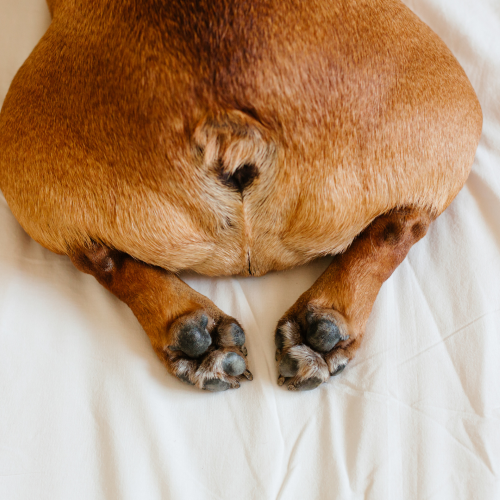
Is your dog dragging their bottom across the floor or constantly licking around their back end? Bum scooting in dogs is often linked to full or impacted anal glands, but diet, fibre intake, stool consistency, weight and underlying health issues can all play a part. In this blog, we look at why scooting happens, the raw feeding myths surrounding anal gland health, when supplements may not be enough and when it is time to speak to your vet.
Why Is My Dog Scooting Their Bum? Anal Glands, Diet and Fibre Explained
You are sitting peacefully in the living room when your dog suddenly sits down, stretches out their back legs and drags their bottom across the carpet.
Bum scooting in dogs can look funny, but it usually means that something around your dog’s bottom feels itchy, uncomfortable or painful. Although anal gland problems are one of the most common explanations, scooting can also be associated with loose stools, constipation, skin irritation, allergies, parasites or something trapped in the surrounding fur.
For dogs with recurring anal gland problems, diet can play a much bigger part than many owners realise. However, the answer is not always as simple as adding pumpkin, sprinkling a fibre supplement over the food or switching to raw feeding.
Sometimes the dog’s entire diet, calorie intake, fibre balance and stool pattern need to be reviewed.
What are a dog’s anal glands?
Dogs have two small anal sacs positioned just inside the anus, usually described as sitting at approximately the four o’clock and eight o’clock positions.
These sacs contain a strong-smelling secretion used for scent communication. In most dogs, the pressure created when a well-formed stool passes through the rectum helps release a small amount of this fluid naturally.
Problems can develop when the sacs do not empty effectively. The material may gradually become thicker and harder to pass, leading to:
Full anal glands
Impacted anal glands
Anal sac inflammation, known as anal sacculitis
Infection
Painful abscesses
Rupture through the surrounding skin
Impacted glands may contain thick, pasty material that is difficult to express. Infected or abscessed glands can become extremely painful and may cause swelling, redness, bleeding or discharge.
Why do dogs scoot their bums?
Scooting is your dog’s attempt to relieve irritation or pressure. Common causes include:
Full or impacted anal glands
Anal gland infection or abscessation
Soft, loose or inconsistent stools
Constipation and straining
Allergic or inflamed skin
Parasites, including tapeworms
Faecal material caught in long fur
Matted hair around the anus
Irritation following diarrhoea
Lumps, growths or changes around the anus
A strong fishy smell, persistent licking, nibbling around the tail base, discomfort when sitting and suddenly turning to look at the back end can also indicate an anal gland problem.
One isolated scoot after a messy bowel movement may simply be caused by residue around the bottom. Repeated scooting, however, should not automatically be treated at home with supplements.
Your vet first needs to establish what is causing it.
How diet affects anal gland problems
Diet affects the size, moisture content, shape and consistency of your dog’s stools.
A stool that is soft, narrow or poorly formed may not place enough consistent pressure against the anal sacs as it passes. Dogs with regular diarrhoea, digestive sensitivity or stools that become progressively softer throughout the day may therefore struggle to empty their glands naturally.
You can read more about this pattern in my blog, Why Is My Dog’s Poop Firm in the Morning but Loose Later in the Day?.
At the opposite extreme, a very small, dry or hard stool is not necessarily better. It may cause straining without creating the healthy bulk needed to support comfortable bowel movements.
Dietary factors that can contribute to recurring anal gland problems include:
Insufficient fibre
An unsuitable balance of soluble and insoluble fibre
Overfeeding
Excessive treats and chews
Sudden food changes
A highly digestible diet producing very small stools
A bone-heavy diet producing dry, chalky stools
Ongoing food intolerance or gastrointestinal disease
Excess calorie intake and weight gain
Research into anal sac disease has identified diarrhoea, skin problems, small body size and obesity as potential predisposing factors. This demonstrates why recurring gland trouble should be considered alongside the dog’s complete health and diet rather than as an isolated problem at the other end of the digestive tract.
Why adding an anal gland supplement might not be enough
There are countless anal gland powders, chews and fibre supplements available. Some contain pumpkin, psyllium, apple pectin, probiotics or combinations of different fibres.
A supplement may help some dogs by altering stool consistency. A 2025 study of one specific fibre-and-probiotic chew reported fewer recurrent impactions in dogs receiving the product. However, this does not prove that every anal gland supplement will work for every dog.
Adding a product without assessing the current diet can also create new problems.
For example, a dog may already be eating a high-fibre weight-management food. Adding more fibre could produce excessive stools, urgency, wind or softer bowel movements. Another dog may have loose stools because they are overfed, receive several rich chews or have an underlying gastrointestinal condition. A spoonful of pumpkin will not resolve those causes.
Supplements can also make it difficult to assess what is actually working, especially when owners introduce pumpkin, probiotics, psyllium and a new food at the same time.
Before adding something, ask:
What is my dog currently eating in total?
How many calories are they receiving?
What is the existing fibre level?
Are their stools soft, small, dry or inconsistent?
Are treats and chews affecting digestion?
Is my dog overweight?
Are there skin, ear or paw symptoms as well?
Has a vet confirmed that the anal glands are the problem?
Sometimes a carefully selected supplement is appropriate. In other cases, changing the complete diet provides a more consistent and effective solution.
What is the optimal fibre level for anal gland problems?
There is no single perfect fibre percentage for every dog.
Fibre differs in its solubility, fermentability, water-holding capacity and effect on the gut. Two foods displaying the same crude fibre percentage can produce very different results because they use different fibre sources.
“Crude fibre” on a pet food label also does not represent all the fibre within the product, particularly the soluble and fermentable fractions. This makes it difficult to compare foods using one number alone. Research shows that fibre source has a significant effect on stool output, stool moisture, digestion and the intestinal microbiome.
As a broad guide, many standard adult foods contain approximately 2–5% crude fibre, while higher-fibre or therapeutic foods may contain considerably more.
For dogs with constipation or recurring anal gland trouble, a plan providing around 8–15% fibre on a dry-matter basis may sometimes be considered. However, this is not a universal target or something I would recommend applying without reviewing the individual dog. Some dogs improve at much lower levels, while others need a particular blend of fibres rather than simply “more”. You can learn more in The Importance of Fibre in a Dog’s Diet.
The aim is a stool that is:
Firm and well formed
Easy and comfortable to pass
Moist rather than dry or chalky
Large enough to create useful pressure
Consistent throughout the day
Soluble fibres can hold water and support the bacteria living in the colon. Less fermentable or insoluble fibres can increase stool bulk. Many dogs benefit from a combination, but fibre should be introduced gradually because sudden increases can cause wind, discomfort or loose stools.
The raw feeding and hard poop myth
A common claim within raw feeding communities is that raw-fed dogs do not suffer from anal gland problems because their stools are harder.
This is an oversimplification.
A raw diet containing a large amount of bone can produce small, pale, dry or chalky stools. Owners may interpret this as excellent digestion because the stools are firm and easy to pick up. In reality, excessive hardness can cause constipation, discomfort and straining.
Harder does not automatically mean healthier.
Anal glands need appropriate pressure during a comfortable bowel movement. A tiny, dry pellet may not create the same broad, even pressure as a well-formed stool with suitable moisture and bulk. Increasing bone to make stools harder can therefore fail to resolve the gland problem and may make bowel movements more difficult.
Read more in my blogs:
Raw diets can also be relatively low in useful dietary fibre unless suitable ingredients have been included. Switching to raw does not correct narrow gland ducts, obesity, skin inflammation, food reactions or an underlying bowel condition. It also does not make a problematic protein harmless: a dog reacting to chicken may still react to raw chicken.
The most appropriate diet is the one that is complete, balanced and suitable for the individual dog—not simply the diet that creates the hardest poop.
Can food allergies/intolerances cause bum scooting?
Food allergies or intolerances are not the most common cause of scooting, but skin inflammation can affect the area around the anus.
A dog with a possible dietary reaction may also experience recurring ear problems, paw chewing, itchy skin or gastrointestinal signs. Environmental allergies can produce similar symptoms and are often more common, so changing food randomly is not a reliable way to diagnose the problem.
Dogs with suspected food reactions need a properly controlled elimination diet rather than repeated switches between foods labelled “sensitive” or “hypoallergenic”.
My Elimination Diet for Dogs guide explains how food reactions should be investigated.
Low-set and high-set anal glands
Anal sacs usually sit at approximately four and eight o’clock, but their exact depth, angle and duct position can vary between dogs.
You may hear glands described informally as “low set”, “high set” or “deep set”. These are not separate diseases. They describe how easy or difficult the glands are to feel and express.
A narrow duct, deeper gland position or less favourable angle may make natural emptying more difficult. Diet can improve stool quality and increase pressure during defecation, but it cannot alter the dog’s underlying anatomy.
This is why some dogs continue to require veterinary monitoring despite producing apparently good stools. A rectal examination allows your vet to assess the position, contents, tenderness and symmetry of the glands.
Which breeds are more prone to anal gland problems?
Any dog can develop an anal sac disorder, but smaller breeds appear to be affected more frequently.
A large UK VetCompass study involving more than 104,000 dogs found an annual prevalence of approximately 4.4%. Breeds with increased odds compared with crossbreeds included:
Cavalier King Charles Spaniels
King Charles Spaniels
Cockapoos
Shih Tzus
Bichon Frisés
Cocker Spaniels
Cavalier King Charles Spaniels had the highest reported prevalence in that study. Brachycephalic dogs as a group were also found to have greater risk than dogs with longer skull shapes.
Breed risk does not mean the problem is inevitable. Weight, stool consistency, skin health, gland anatomy and gastrointestinal function still matter.
When should you see a vet about scooting?
Contact your vet when scooting is recurring or when you notice:
Redness or swelling next to the anus
Blood, pus or an open wound
A strong fishy smell that keeps returning
Pain when sitting or passing stools
Persistent licking or biting
Straining or constipation
Diarrhoea lasting more than a brief episode
A firm lump or one gland that feels different
Lethargy, appetite loss or other signs of illness
An anal gland abscess can rupture through the skin and is extremely painful. Firm, enlarged or non-expressible glands also need further investigation because infection, abscessation and anal sac tumours can sometimes feel similar without an appropriate examination.
Do not repeatedly express your dog’s glands at home unless your vet has specifically taught you how and advised that it is appropriate. Incorrect or unnecessary squeezing can cause pain and irritation.
How I can help
Once your vet has ruled out infection, abscesses, parasites and other medical causes, I can help you review the dietary factors that may be contributing.
During an Everyday Nutrition Consultation, we can assess:
Your dog’s current food and fibre sources
Stool size, consistency and frequency
Their calorie intake and body condition
Treats, chews and table food
Whether supplements are necessary
Whether the current complete food is appropriate
How to introduce dietary changes gradually
Whether a higher-fibre or more digestible diet may be suitable
The aim is not to add as many digestive products as possible. It is to identify why your dog’s stools are not supporting natural gland expression and create a realistic feeding plan that addresses the diet as a whole.
The bottom line
Recurring bum scooting should not be dismissed as a funny habit.
Impacted anal glands are common, but the underlying reason may involve loose stools, overly hard stools, obesity, skin inflammation, digestive disease or the position of the anal sacs and their ducts.
Fibre can be incredibly helpful, but more is not always better. The right type, amount and source must be chosen for the dog in front of us.
Rather than relying on raw feeding, excessive bone or a collection of anal gland supplements, look at the complete picture: diet, calories, stool quality, treats, weight, skin health and veterinary findings.
That is far more likely to get to the bottom of the problem.
