
Dental Powders and Chews for Dogs: What Works, What to Avoid, and Why Brushing Is Best
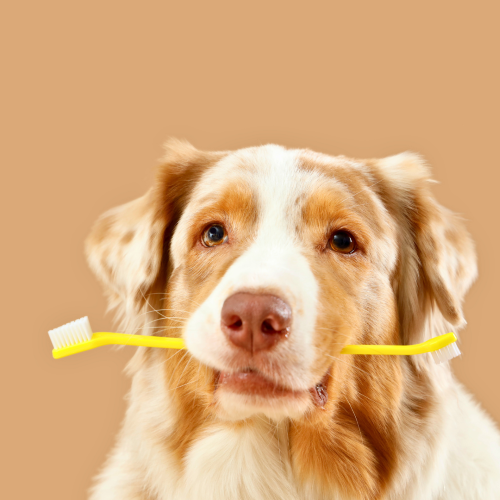
If you have ever stood in the pet shop staring at dental powders, plant-based chews, sticks, bones, and “natural” plaque removers, you are not alone. Dental products for dogs are heavily marketed, often convincing owners that one chew a day is enough to keep teeth clean and gums healthy.
It would be lovely if it were that simple and straightforward.
The reality is that periodontal disease is one of the most common health problems seen in dogs, with evidence suggesting most dogs show signs of it by the time they are a few years old. Small breeds such as Jack Russells and Yorkshire Terriers are particularly vulnerable . Daily toothbrushing remains the gold standard for plaque control, and when disease is already present, proper veterinary dental treatment under anaesthesia is what actually allows diagnosis and treatment below the gumline. Dental chews and powders can help, but they are support tools, not a substitute for brushing or a proper dental.
So if you want the honest version, here it is: some dental products are worth considering, some are mostly marketing, and some can be a poor choice for certain dogs altogether.
This guide breaks down exactly where dental powders and chews fit in, which products are more credible, what the Veterinary Oral Health Council seal actually means, and when to avoid these products altogether.
Why dental health matters so much in dogs
A bit of tartar is often brushed off as cosmetic, but dental disease is not just about yellow teeth or bad breath. Plaque is a bacterial biofilm. If it is not removed regularly, it mineralises into calculus and contributes to inflammation of the gums and progression of periodontal disease. As that disease worsens, deeper structures are affected, including the tissues and bone supporting the tooth. That is why dogs can end up with pain, loose teeth, infection, and tooth loss even when owners only notice “a bit of bad breath.”
This is also why brushing matters so much. Plaque is soft and removable. Once it becomes hard calculus, you are no longer dealing with something a chew or toothbrush can reliably undo completely. That is where professional treatment comes in. The AAHA guidelines are clear that proper dental care requires assessment and treatment under general anaesthesia because disease below the gumline cannot be properly diagnosed or treated in an awake dog. Supragingival scaling alone is cosmetic and does not address the painful disease hidden underneath.
Brushing and proper veterinary dentals are the gold standard
This is the part many brands do not want to emphasise.
Daily toothbrushing is still the gold standard for preventing plaque accumulation and slowing periodontal disease. That is not a social media opinion. It is the position reflected by veterinary dental and professional guidance. If you can brush your dog’s teeth daily with a pet-safe toothpaste, you are doing more for their oral health than almost any supplement, powder, or chew on the shelf.
But brushing is only one part of the picture. If a dog already has established dental disease, brushing alone will not fix what is already happening under the gums. A full veterinary dental under anaesthesia allows for oral examination, probing, cleaning beneath the gumline, radiographs, and treatment where needed. That is why “anesthesia-free dentals” are not considered an equivalent option by major veterinary bodies. They may make teeth look cleaner above the gumline, but they do not provide meaningful treatment of periodontal disease.
So, in practical terms, the best hierarchy looks like this:
Regular home brushing
Appropriate veterinary dental assessment and treatment when needed
Adjuncts such as evidence-backed dental chews, diets, gels, or powders
That order matters.
Where dental chews and powders actually fit
Dental chews and powders can absolutely have a place. The mistake is treating them as the whole plan rather than part of the plan.
A good dental chew may help reduce plaque and tartar accumulation through mechanical action, salivary stimulation, or active ingredients. A dental powder may help some dogs, especially when brushing is patchy or not tolerated well, but powders are not magic dust. They do not replace mechanical plaque removal, and they are not suitable for every dog.
I tend to frame them like this:
Brushing is your foundation.
A proper dental is your treatment tool when disease is present.
Chews and powders are add-ons that may improve the daily routine if chosen carefully.
That is a very different message from “give this chew and never worry about teeth again.”
What the VOHC seal means and why it matters
If you are going to recommend or buy dental products, the Veterinary Oral Health Council, or VOHC, is one of the most useful filters available. VOHC recognises products that meet pre-set standards for plaque and/or tartar retardation in dogs and cats based on data from trials conducted according to VOHC protocols. The organisation reviews submitted data, although it does not test the products itself.
That distinction matters.
The VOHC seal does not mean a product is perfect. It does not mean it replaces brushing. It does not mean every ingredient suits every dog. But it does mean the product has cleared a higher bar than vague claims like “supports oral health” or “helps keep teeth clean.”
In a market full of fluffy marketing language, that is valuable.
As of the current VOHC accepted-products listings, examples of accepted canine chew and powder products include
Cats also have accepted products, including feline PlaqueOff powders and Feline Greenies dental treats. Because accepted products can change over time, it is always worth checking the live VOHC list rather than relying on an old blog post or retailer claim.
Are dental powders worth it?
Sometimes, yes.
Most owners asking about dental powders are really asking one of two things:
“Can this help if I am not brushing consistently?”
“Is this an easier alternative to brushing?”
The honest answer is that a dental powder can be a helpful addition, especially in dogs who will not tolerate brushing well yet, or where owners are trying to layer in support. But it is not a like-for-like alternative to brushing. Powders do not physically scrub plaque off teeth in the way brushing does. Their benefit depends on the formulation and, importantly, whether the specific product has evidence behind it.
One of the best-known types is seaweed-based powder made from Ascophyllum nodosum, as used in ProDen PlaqueOff. There is published research showing that edible treats containing Ascophyllum nodosum can reduce plaque and calculus accumulation in dogs, and products in this category do appear on the VOHC accepted list. That gives them more credibility than the average “sprinkle this on and tartar melts away” claim.
That said, this is where nuance matters.
A powder may improve breath and may reduce the rate of plaque or tartar build-up in some dogs. It is not a replacement for active oral hygiene. If a dog already has inflamed gums, periodontal pockets, fractured teeth, resorptive disease, or painful oral lesions, a powder is not the solution.
When to avoid dental powders
This is the section people often skip, and they should not.
Many seaweed-based powders are naturally high in iodine. Official PlaqueOff guidance states that these products should not be used, or should only be used with veterinary input, in animals with thyroid problems because of that iodine content. The product information for both dogs and cats specifically warns about thyroid conditions.
So when should you be cautious or avoid them?
1. Dogs or cats with thyroid disease
This is the big one. If a product is iodine-rich and seaweed-based, it is not something I would use casually in a pet with thyroid disease. This is especially important in cats, where thyroid disease is a much more common real-world discussion point. If there is known hyperthyroidism, a past thyroid issue, ongoing thyroid medication, or uncertainty around thyroid status, veterinary input comes first.
2. Dogs already needing a dental procedure
If gums are bleeding, breath is foul, teeth are visibly loose, the dog is reluctant to chew, or there is obvious tartar and inflammation, a powder is not solving the main issue. It may delay proper treatment because owners feel they are “doing something.” In that setting, the priority is a veterinary oral exam and likely a proper dental work-up.
3. Dogs with ingredient sensitivities or medical complexity
Some dogs have multiple dietary limitations, food sensitivities, gastrointestinal disease, or very tightly controlled elimination diets. Even a small daily addition can matter in those cases. A dental powder may be perfectly fine for the average healthy dog, but that does not mean it suits every patient.
4. Owners using it instead of brushing forever
As a stepping stone, fair enough. As the long-term only strategy, I would not class that as ideal dental care.
What makes a dental chew a better choice?
Not all dental chews are created equally. Some are evidence-backed. Some are basically biscuits with a wellness claim on the packet.
A better dental chew usually has a few things going for it:
a credible evidence base or VOHC acceptance
an appropriate texture and design intended to contact the tooth surface
a size matched to the dog
sensible calories for regular use
ingredients that suit that dog’s wider health picture
VOHC itself reminds owners to feed the correct size chew for the dog’s weight range. That sounds obvious, but it matters. Too small and the dog may gulp it. Too large or too hard and you can create a different set of problems.
Calories matter too. A dental chew is still food. For a small dog, a daily chew can be a meaningful part of the calorie budget. If a dog is overweight, pancreatitis-prone, on a restricted diet, or simply sedentary, the “healthy dental chew” may still be a poor fit if it pushes calories too high.
Choosing the right chew
When choosing among them, I would still filter further based on the individual dog:
For dogs needing calorie awareness: choose carefully and account for the chew in daily intake.
For dogs with protein sensitivities or elimination trials: ingredient lists matter.
For dogs with dental pain or fragile teeth: even approved chews are not automatically suitable.
For brachycephalic, toy, or fast-swallowing dogs: supervision and size are essential.
In other words, VOHC is the first filter, not the only filter.
What to avoid in dental chews and “natural dental” products
This is where marketing gets many owners into trouble.
Just because something is sold as natural does not mean it is safe for teeth. Some of the worst offenders for dental trauma are exactly the products marketed as ancestral, long-lasting, and satisfying.
That includes:
antlers
hard bones
hooves
very hard nylon chews
anything that fails the common-sense “too hard for enamel” test
Hard chews are a classic cause of fractured teeth. Veterinary dental guidance and related educational resources repeatedly warn against hard objects for this reason. Raw bones and antlers are particularly important to mention because they are so often sold as dental tools when they can instead become expensive dental emergencies.
This is exactly why I would steer owners away from “natural” dental claims built around very hard chew items. They may scrape at the surface, but that does not make them a smart or low-risk oral care strategy.
What about cats?
You asked to touch on dogs and cats, especially around thyroid disease, and this is worth a brief note.
Cats absolutely develop dental disease too, and VOHC also maintains a current accepted-products list for cats. That includes feline PlaqueOff powders and Feline Greenies dental treats. But the thyroid point is especially relevant in cats because seaweed-based iodine-containing products come with official caution around thyroid problems there too. So while a powder may be acceptable for some healthy cats, it should not be treated as universally suitable.
A realistic, evidence-based approach for owners
If I were giving a simple, practical plan to most owners, it would look like this:
Start by aiming for regular brushing, even if you build up gradually. Use a pet-safe toothpaste. If the dog will only tolerate a finger brush or gauze at first, that is still a useful starting point. Daily is the target because brushing needs to be frequent to meaningfully disrupt plaque.
If brushing is inconsistent or you want another layer of support, add a VOHC-accepted chew that suits your dog’s size, calories, and medical needs. If considering a powder, use one with credible backing and avoid seaweed/iodine-based options in pets with thyroid issues unless your vet specifically advises otherwise.
And if there is already visible disease, pain, bleeding gums, or heavy tartar, skip the temptation to “treat it naturally” at home. Book the dental assessment.
That is the difference between dental wellness marketing and actual dental care.
Final thoughts: are dental powders and chews worth using?
Yes, they can be.
But only when we are honest about what they are and what they are not.
Dental powders and chews can support oral health. Some are clearly more credible than others, especially those with the VOHC seal. They may help reduce plaque and tartar accumulation, improve breath, and make daily dental care more achievable for some households.
What they are not is a replacement for:
daily brushing
veterinary oral examination
proper dental treatment under anaesthesia when disease is present
If you remember one thing from this blog, let it be this: the gold standard is brushing and proper veterinary dentals. Powders and chews are the assistants, not the main act.
And when choosing an assistant, do not let “natural” or “vet approved” style marketing do the thinking for you. Check whether the product has the VOHC seal. Check the calorie impact. Check whether the ingredients suit your dog. And if the product is iodine-rich and seaweed-based, stop and think carefully before using it in any dog or cat with thyroid concerns.
want help with supplements in your dog’s diet? Book a consultation today
