
Should Dogs Eat Blueberries? Benefits, Risks and the Truth About Their Antioxidants
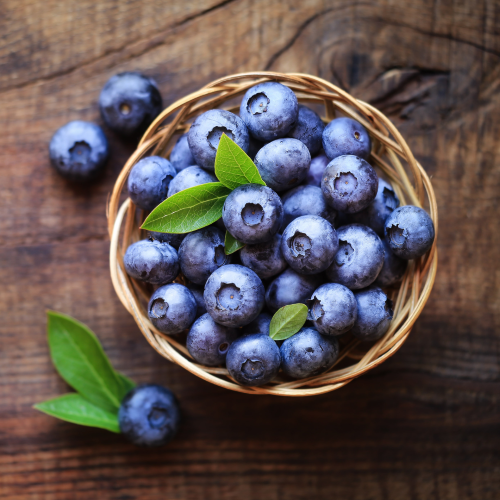
Blueberries have a very good reputation. They are often described as a superfood, praised for their antioxidants, and marketed as though a handful of berries can somehow transform a dog’s health overnight.
The reality is more grounded than that.
Yes, dogs can eat blueberries. They are generally considered safe for dogs when fed in moderation, and organisations such as the ASPCA include blueberries among foods that can be shared sparingly, while clearly distinguishing them from dangerous fruits like grapes and raisins.
But “safe” and “magical” are not the same thing.
Blueberries can absolutely be a nice fresh addition to some dogs’ diets. They are low in calories relative to many commercial treats, contain fibre, and provide polyphenols such as anthocyanins. At the same time, we need to be realistic about what they can and cannot do. A few blueberries on top of a poor overall diet do not create nutritional balance. They do not cancel out chronic overfeeding. They do not replace a properly formulated complete food. And while blueberry polyphenols are scientifically interesting, the leap from “contains antioxidants” to “will noticeably improve your dog’s health” is often much bigger than social media makes it sound.
That is the angle I want to take here: blueberries are a perfectly reasonable treat for many dogs, but they only make sense when viewed in relation to the diet as a whole.
Can dogs eat blueberries?
Yes. For most healthy dogs, fresh or frozen plain blueberries are safe in small amounts. They are not known to be toxic in the way grapes and raisins are, and veterinary and pet safety resources routinely list them among foods that can be offered sparingly.
That said, “dogs can eat blueberries” does not mean every dog should eat them freely or that more is better.
Any extra food you add to a dog’s bowl should be looked at through three questions:
Is it safe?
Is it appropriate for this individual dog?
Does it fit within the overall calorie and nutrient picture?
Blueberries pass the first question for most dogs. The second and third questions are where more nuance matters.
Are blueberries good for dogs?
They can be.
Blueberries are a relatively low-calorie fruit and are known to contain fibre, vitamin C, and plant compounds including anthocyanins and other polyphenols. USDA-linked nutrition data places raw blueberries at roughly 57 kcal per 100g, which is one reason they are often seen as a lighter alternative to richer snacks.
From a practical point of view, that means blueberries may be useful when an owner wants:
a small fresh treat
a lower-calorie reward option
a food enrichment extra for a dog who enjoys fruit
a simple topper used in tiny amounts
Those are sensible uses.
What they are not is an essential food for dogs. A dog does not need blueberries to have a healthy diet. If your dog never eats one in their life, that is not a nutritional deficiency. A complete and balanced dog food should already be designed to meet nutritional requirements without requiring “superfood” add-ons. Veterinary nutrition guidance consistently stresses that treats and extras should stay as a small proportion of total intake, with the vast majority of calories coming from the dog’s main complete diet.
That is where a lot of feeding conversations go wrong. Owners get drawn into the idea that individual ingredients are the answer, when the bigger issue is almost always the total diet pattern.
Blueberries and antioxidants: useful, yes. Miracle, no.
This is where we need to be realistic.
Blueberries are rich in polyphenols, particularly anthocyanins, and there is a substantial body of literature looking at berries, blueberry compounds, oxidative stress, inflammation, gut health and cognition. Review papers do support the idea that blueberries are biologically active foods with potentially beneficial effects.
However, that does not automatically mean that tossing a few blueberries into your dog’s bowl will produce meaningful clinical change.
It is also really important to be careful when interpreting this kind of research, because much of the work on blueberries and antioxidants comes from human studies. While those studies are interesting and can help point us towards areas worth exploring, they are not directly transferable to dogs. Dogs have different digestive physiology, different metabolism, different nutrient requirements and different disease patterns. So although human research may suggest potential benefits, it cannot be treated as accurate proof that dogs will respond in the same way.
That matters, because one of the biggest mistakes in pet nutrition is taking promising human nutrition data and presenting it as though it already applies cleanly to dogs. It does not. At best, it gives us ideas or hypotheses. It does not give us certainty.
A 2023 systematic review of randomized controlled human trials on berry consumption and oxidative stress biomarkers concluded that although berries are associated with health benefits, it is still unclear whether berry intake has a significant and consistent impact on oxidative stress biomarkers across the board. In other words, the science is interesting, but not nearly as simple as “berries in = oxidative stress solved.”
That distinction matters.
A food can be nutritionally positive without being transformative.
A food can contain antioxidants without having clinically obvious antioxidant effects in every real-world context.
And a food can be worth feeding sometimes without deserving the exaggerated “superfood” label it is often given online.
The bigger picture: the whole diet matters more
This is the most important section of the article.
If your dog is eating a complete and balanced diet that is appropriate for their life stage, body condition, health status and calorie needs, then adding a few blueberries is simply that: an addition. It may add a little variety and a little fresh-food value. It may make enrichment more enjoyable. It may help owners swap out some higher-calorie treats. All of that is reasonable.
But if the overall diet is poor, unbalanced, excessively calorific, or inappropriate for the dog’s medical needs, blueberries do not fix that.
This is one of the most common nutrition mindset problems I see. Owners understandably focus on “good ingredients” because they feel tangible and positive. They start adding blueberries, salmon oil, kefir, seeds, powders, toppers and supplements, often believing that the bowl is becoming healthier and healthier. There is no strategy to what they add in and they believe “more is more” when it comes to “healthy additions”
Sometimes it is.
Often, though, what is really happening is this:
calories creep up
the diet becomes less consistent
the dog becomes fussier
the main complete food gets diluted more and more
the nutrient balance becomes less reliable
Fat and protein ratios become skewed
the owner overestimates the benefit of small additions
That is why veterinary guidance repeatedly comes back to the same principle: extras should remain limited, and the dog’s main food should do the heavy lifting nutritionally.
So yes, fresh additions are fine. I have no issue with that in principle. But they need to be kept in perspective.
How many blueberries can dogs eat?
There is no universal magic number, because safe amounts depend on:
the dog’s size
total daily calorie needs
the rest of the diet
digestive tolerance
whether the dog is on a weight-loss or therapeutic plan
What is well established in veterinary nutrition guidance is the 10% rule: treats and extras should generally make up no more than 10% of a dog’s daily calorie intake, with 90% or more coming from a complete and balanced main diet.
Because blueberries are relatively low in calories, they can fit into that allowance more easily than many commercial treats. But “low calorie” is not the same as “free food.” They still count.
A practical approach might look like this:
Tiny dogs: 1–3 blueberries
Small dogs: 2–5 blueberries
Medium dogs: 4–8 blueberries
Large dogs: 6–10 blueberries
Those are not strict medical limits, just sensible starter amounts for treat use.
If a dog is on a calorie-controlled plan, has a very sensitive gut, or is eating a therapeutic diet where consistency matters, even blueberries may need to be limited or skipped.
Potential benefits of blueberries for dogs
Let’s keep this realistic.
1. They are a lower-calorie treat option
Compared with biscuits, chews and fatty table scraps, blueberries can be a lighter alternative. That can help when owners want rewards that do not quietly add too many calories.
2. They contain fibre
Blueberries provide a small amount of fibre, which may contribute modestly to satiety and gut health, though the amounts fed as treats are usually small.
3. They provide polyphenols
Blueberries contain anthocyanins and other phytochemicals that are of real scientific interest. These compounds are one reason berries are widely studied in relation to oxidative balance and inflammation.
4. They can add variety and enrichment
Many dogs enjoy the texture and taste of blueberries fresh or frozen. Used appropriately, they can be a simple enrichment extra. This may be one of their most practical real-world benefits.
Notice what is missing from this list: I am not claiming they detoxify, boost immunity in some dramatic way, or prevent disease. That would go beyond the evidence.
Are there any risks?
Yes, though for most dogs they are fairly minor.
Choking risk
For very small dogs, greedy eaters, or dogs that bolt food, whole blueberries may be a choking hazard. Mashing or halving them can be a better option. ASPCA guidance on sharing produce with pets also recommends cutting firmer foods into suitable bite-size pieces.
Digestive upset
Too many blueberries at once can cause loose stools, bloating or stomach upset. Fruit is still a dietary change, and some dogs tolerate it better than others.
Calorie creep
This is the big one. Even nutritious extras can become a problem when owners forget to count them. The issue is rarely blueberries themselves; it is the accumulation of all extras across the day.
Inappropriate blueberry products
Plain fresh or frozen blueberries are one thing. Blueberry muffins, blueberry yoghurts, jams, dried fruit mixes, desserts and sweetened snacks are another. These can contain added sugar, excess fat, or ingredients unsafe for dogs.
Not ideal for every medical case
Dogs on highly controlled elimination diets, certain prescription diets, or strict gastrointestinal plans may not be good candidates for casual fruit additions. In those cases, even a “healthy” extra can muddy the waters.
Fresh blueberries vs blueberry ingredients in dog food
This is another area worth being realistic about.
Blueberries often appear on pet food packaging because they sound appealing to owners. They signal freshness, antioxidants and health. But a 2025 study looking at commercial dog and cat kibble with added blueberries found low levels of free phenolics, suggesting that the antioxidant contribution of those blueberry inclusions may be limited in many products.
That does not mean blueberries are useless in pet food. It does mean that the presence of “blueberries” on a bag should not be overinterpreted as proof of meaningful antioxidant power in the finished diet.
This is a good example of why ingredient marketing can get ahead of evidence. A whole fresh blueberry used as an occasional treat is one thing. A token blueberry inclusion in an ultra-processed product marketed as antioxidant-rich is something else.
Should puppies eat blueberries?
Usually, in very small amounts, yes—provided they are fed plain, introduced gradually, and fit within the puppy’s overall diet.
But puppies do not need lots of extras. Their main priority is a properly formulated complete diet that supports growth. Too many toppers, treats and fashionable add-ins are one of the easiest ways to dilute a puppy’s diet or create digestive issues. The same logic applies here: a blueberry or two is not automatically a problem, but it should stay a small extra, not become a routine bowl-building obsession.
Can dogs eat frozen blueberries?
Yes, many can. Frozen blueberries can make a nice summer treat or enrichment addition. Just use common sense:
supervise your dog
avoid large frozen handfuls for dogs that gulp
use smaller quantities for tiny dogs
skip them if your dog has sensitive teeth or tends to swallow treats whole
When I would avoid them
I would be cautious or avoid blueberries in dogs who:
are on a strict elimination diet
are in the middle of a gastrointestinal flare-up
need a very tightly controlled veterinary diet
are extremely small and prone to gulping
get loose stools easily from fruit
Young puppies under 6 months
are already receiving too many extras and need simplification rather than more additions
Again, this is why nutrition cannot be reduced to “is this food healthy?” The better question is always: is this food appropriate for this dog, in this amount, within this overall plan?
So, should dogs eat blueberries?
My answer is:
They can, and for many dogs they are a perfectly nice treat. But they do not deserve to be overhyped.
Blueberries are not toxic to dogs, they are relatively low in calories, and they contain fibre and plant compounds that make them a reasonable fresh-food extra. The science around berries and polyphenols is interesting, and there is enough evidence to say blueberries are more than just empty calories.
At the same time, the evidence does not support treating blueberries like a miracle ingredient. Their antioxidant potential is real, but often exaggerated. Clinical effects are context-dependent, dose-dependent and far less dramatic than marketing often suggests. Even in the canine literature, the findings are promising but limited—not proof that a few blueberries a day will change the course of your dog’s health.
So yes, feed them if your dog enjoys them and they fit the plan.
Just keep the main thing the main thing:
the overall diet
total calories
consistency
nutritional balance
your dog’s individual needs
That is where real progress is made.
Check out more articles in the “can dogs eat” series
Want more clear, evidence-based answers to common feeding questions? My Can My Dog Eat That? eBook covers 100 dog-safe foods, ingredients to avoid, and practical guidance to help you make sense of everyday feeding decisions without the hype.
References
ASPCA. Foods you can safely share with your pet; poisonous foods to avoid.
Dunlap KL et al. Total antioxidant power in sled dogs supplemented with blueberries.
Maturana M et al. Effects of blueberry consumption on digestibility and oxidative balance in dogs.
Stote KS et al. Systematic review of berry consumption and oxidative stress biomarkers.
Stull AJ et al. The state of the science on the health benefits of blueberries.
Kosmal PAL et al. Commercial pet foods with added blueberries may provide low levels of phenolics.
