
Pet Food Safety: What Dog Owners Should Know Before Choosing a Food
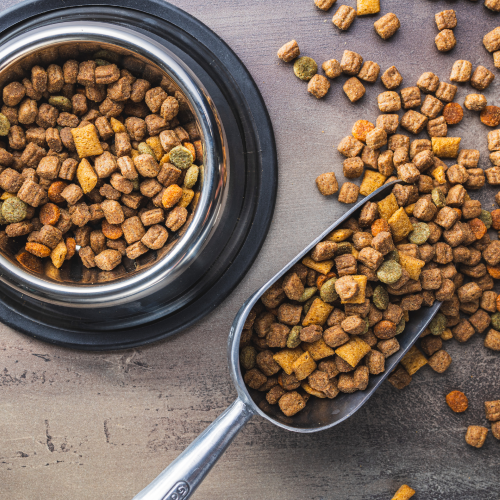
Fresh doesn’t automatically mean safe. Learn what UK pet food companies are legally required to do, what goes above and beyond, and the questions to ask before choosing your dog’s food.
Recent very serious conversations around dog food have made many owners stop and think about something we perhaps haven't paid enough attention to before:
How much do we actually know about the safety systems behind the food we buy?
There has already been a huge amount of discussion around individual brands, recalls, specific cases and potential long-term health impacts. But rather than continuing to speculate where we don't yet have all the answers, I think there is something much more useful we can take from those conversations as dog owners.
We can learn to ask better questions.
We're very good at scrutinising dog food ingredient lists.
We compare meat percentages, look for words such as fresh, natural and gently cooked, debate processing methods and perhaps check websites such as All About Dog Food before deciding what goes into our dog's bowl.
But how often do we ask:
Who actually manufactures this food? What could go wrong during production? And what systems are in place to prevent it?
That's not because dog owners haven't cared about safety. We simply haven't historically been given many tools to assess it.
We have also been conditioned by certain areas of pet food marketing to think that ingredients are where the conversation ends and that processing is automatically something negative.
I think that needs to change.
This isn't about creating fear around dog food or producing another list of "good" and "bad" brands. If you know anything about me professionally, you'll know I don't believe dog foods can simply be classified as good or bad.
It's about understanding what pet food manufacturers are already required to do, recognising what genuinely represents additional safety assurance and knowing which questions can give us a fuller picture of the company behind our dog's food.
Because fresh doesn't automatically mean safe, minimally processed doesn't automatically mean better, and a high nutritional rating cannot tell us everything about how a food is manufactured or its safety systems.
Fresh doesn't automatically mean safe
"Fresh" has become one of the biggest selling points in pet food.
Alongside it you'll often find words such as:
natural
gently cooked
minimally processed
real ingredients
fresh meat
locally sourced
There is nothing inherently wrong with any of these things.
But they don't tell us whether the manufacturer's food-safety systems are robust.
Different ways of producing food simply create different hazards that need to be managed appropriately.
A fresh cooked food, for example, needs appropriate controls around cooking, cooling, packaging, refrigeration and storage.
Raw pet food doesn't have the same type of cooking kill step, so controlling microbiological hazards becomes particularly important. Government guidance specifically discusses bacterial testing requirements for pet food manufacturers using animal by-products, regardless of whether those ingredients may also be described as "human grade".
Dry foods also require appropriate control of ingredients, processing, storage and possible contamination before or after manufacture.
This isn't about saying one feeding method is inherently safe and another unsafe.
The processing method alone cannot tell you how good the manufacturer is at identifying and managing its risks.
And that distinction matters.
What are pet food companies already required to do?
This is where things can get confusing for dog owners.
Pet food is legally classed as animal feed, so businesses manufacturing and marketing it operate within animal-feed legislation.
In Great Britain, businesses making or selling animal feed need to be registered or, for some activities, approved by the appropriate authority. Feed hygiene rules also cover areas such as storage, transport, equipment, staff training and record keeping.
Pet food manufacturers are also expected to have a feed-safety management system based on Hazard Analysis and Critical Control Point principles — HACCP.
If a manufacturer processes animal by-products into pet food, APHA approval may also be required.
There are basic statutory requirements surrounding areas including:
feed-business registration or approval
hygienic production and storage
HACCP-based safety procedures
traceability and records
permitted materials and additives
correct labelling
animal-by-product controls where applicable
bacteriological sampling for relevant pet-food production
These requirements are important.
A company doing them properly should absolutely be viewed positively.
But there is an important distinction between:
"This is something we are legally required to do."
and
"This is an additional safety measure we have voluntarily put in place."
Owners should be able to tell the difference, and ideally companies should make clear which parts of their safety programme are statutory requirements and which go beyond the regulatory baseline.
Unfortunately, right now that information isn't always easy to find.
"We test our food" — but what does that actually mean?
This is probably one of the biggest things I want dog owners to take away from this article.
Many companies use phrases around testing as a reassurance or marketing plus.
If a company tells you:
"We test our food."
Don't automatically assume that means they are going above and beyond.
Ask another question:
What do you test for, how often, and which of those tests are additional to your statutory requirements and how to you deal with test results?
APHA guidance states that relevant pet-food factories processing animal by-products need bacteriological testing forSalmonella and Enterobacteriaceae.
Samples must be sent to a UKAS accredited laboratory, and APHA can require additional testing as part of a site's operating conditions. The exact sampling arrangements can vary according to the facility and product.
So a company stating that it tests for Salmonella isn't necessarily describing an exceptional voluntary safety programme.
It may be describing something that is already part of the regulatory framework under which it operates.
That doesn't make the company bad.
It simply means we need more information before presenting that testing as evidence that one company is significantly safer than another.
So what might "above and beyond" look like?
There isn't one test, certificate or procedure that can guarantee that a pet food will never have a problem.
Food safety works through layers of controls.
What is appropriate will also depend upon the food, ingredients, manufacturing process and risks involved.
But when I'm looking at a company's approach to safety, these are some of the areas I'm interested in.
1. Supplier controls
Safety starts long before ingredients arrive at the factory.
Ask:
How are suppliers approved?
Are higher-risk suppliers audited?
Are ingredients supplied to defined specifications?
Does the manufacturer require certificates of analysis?
Is any independent testing carried out on incoming ingredients?
A finished-product test cannot compensate for poor supply-chain control.
2. Additional risk-based testing
Instead of simply asking, "Do you test your food?", ask what the testing programme actually looks like.
Depending upon the product and identified risks, a manufacturer may perform additional microbiological, chemical or quality testing beyond the statutory minimum.
The key isn't having the longest list of tests possible.
It's having a testing programme that makes sense for the hazards associated with that particular product.
3. Environmental monitoring
Food itself isn't the only thing that can be tested.
Manufacturers may also monitor the production environment through methods such as swabbing equipment or areas of the facility.
This can help identify potential contamination within the factory environment before it becomes a finished-product problem.
4. Hold-and-release procedures
This is one of my favourite questions to ask.
If a manufacturer sends a finished product for important safety testing, is that product held until the results come back?
Or could it already have entered distribution?
There may be perfectly valid reasons for different procedures depending upon the test and risk, but asking this tells you far more than simply hearing that "every batch is tested".
It's great to know every batch is tested — but if those batches are released before the relevant results come back, that's a different process from a true hold-and-release or positive-release system.
5. Independent certification
Some manufacturers voluntarily operate under independently audited standards.
One example is BRCGS certification.
The BRCGS Global Standard for Food Safety provides a framework covering product safety, legality, integrity, quality and operational controls, with sites assessed by an independent certification body.
Does certification mean a problem can never happen?
No.
No food-safety system can promise that.
But independent auditing can add another layer of assurance beyond a business simply telling us that its own procedures are excellent.
6. Traceability and mock recalls
If something does go wrong, speed matters.
A manufacturer should be able to identify:
Which ingredients went into which batch?
Where did those ingredients come from?
Where did the finished products go?
I'd also ask whether the company conducts mock recalls or traceability exercises to test how well that system actually works.
You don't want the first real test of a recall procedure to be during an actual incident.
7. Retained samples
Does the manufacturer keep samples from production batches?
Does the Manufacturer keep back samples from ingredients coming in from a third party?
Retained samples can potentially be useful when investigating complaints or concerns later.
Again, it's another piece of the overall picture rather than something that guarantees safety on its own.
Ask who actually makes the food
Here's another surprisingly simple question:
Who manufactures your dog's food?
The company whose logo appears on the packet isn't necessarily the company physically making it.
There is nothing automatically wrong with contract manufacturing, private-label products or several brands being made within the same factory.
Some third-party manufacturers have enormous experience and very sophisticated quality-control systems.
What matters is transparency.
Ask:
Is your food manufactured in your own facility?
If not, who manufactures it?
What certifications and approvals does that manufacturing facility hold?
Who is responsible for quality and food safety?
What qualifications or experience does the safety and quality team have?
I'm much more interested in those answers than whether sweet potato appears three places higher than peas on an ingredient list.
Nutrition and food safety aren't the same thing
This is another distinction we need to make.
A nutritionally complete food and a safely manufactured food are not the same question.
A company could formulate an excellent complete food and still potentially experience a manufacturing or contamination problem.
Equally, a factory could have excellent hygiene and safety controls while producing a diet that isn't nutritionally appropriate for your individual dog.
When I assess a food, I want to consider three things:
1. Is it nutritionally appropriate for this dog?
2. Is it manufactured by a company with robust quality and safety systems?
3. Is the individual dog actually doing well on it?
One percentage score cannot answer all three.
Why I don't think All About Dog Food should make our feeding decisions for us
I know many owners use All About Dog Food (AADF) when choosing their dog's food.
My concern is when its percentage score becomes the reason we decide one food is "better" than another.
AADF itself explains that its nutritional ratings are produced using its own algorithm.
The algorithm evaluates factors including ingredients, estimated ingredient quantities, what it describes as bio-appropriateness, nutrient availability and processing methods. AADF states that the resulting score estimates how beneficial it expects a food to be for the majority of dogs.
That's important context.
It is a nutritional rating system. It is not a factory food-safety audit.
The score cannot tell you:
how frequently the manufacturing environment is monitored
whether suppliers are audited
whether product is held pending particular laboratory results
whether the facility has independent safety certification
how effective its traceability systems are
whether mock recalls are performed
who oversees quality assurance
what happens internally when something goes wrong
Yet it's very easy for an owner to look at two percentage scores and conclude that the highest-rated food must automatically be the better choice.
Here's a real-life example:
LUNA & me Superblends Senior Raw Dog Food — 96% rating on AADF
compared with:
Paleo Ridge Classic — 89% rating on AADF
On the rating alone, it would be reasonable for an owner to assume Food A must simply be the superior choice.
But now let's look at the publicly declared food-safety measures behind those two foods.
| Safety measure | LUNA & me | Paleo Ridge | Above statutory baseline? |
|---|---|---|---|
| DEFRA/APHA approval | ✅ Declared | ✅ Declared | ❌ Mandatory where applicable |
| HACCP | ✅ Declared | ✅ Required within systems | ❌ Essentially baseline |
| Required Salmonella / Enterobacteriaceae product testing | ✅ Declared | ✅ Declared | ❌ Testing itself is mandatory where applicable |
| Positive release / hold product pending results | ✅ Yes – specifically claims positive release | ✅ Yes – says products are not released while testing is ongoing | ✅ Meaningful additional control |
| Raw ingredient Salmonella testing before production | Not publicly detailed | ✅ Yes – risk-based testing of incoming raw materials | ✅ Significant additional control |
| Higher-risk ingredients tested more frequently | Not publicly detailed | ✅ Yes | ✅ Additional risk-based control |
| Quarantine of failed incoming ingredients | Not publicly detailed | ✅ Yes | ✅ Additional control |
| Investigation with supplier following positive result | Not publicly detailed | ✅ Yes | ✅ Additional supplier-control process |
| Salmonella serotyping after detection | Not publicly detailed | ✅ Yes | ✅ Significant additional investigation |
| Environmental microbiological swabbing | Not publicly detailed | ✅ Yes | ✅ Additional monitoring |
| Environmental Salmonella testing | Not publicly detailed | ✅ Yes | ✅ Additional monitoring |
| Environmental Listeria testing | Not publicly detailed | ✅ Yes | ✅ Additional monitoring |
| Environmental Enterobacteriaceae monitoring | Not publicly detailed | ✅ Yes | ✅ Additional monitoring |
| Formal third-party raw-food safety certification | None I could verify publicly | ✅ RawSAFE | ✅ Additional third-party assurance |
| Independent safety audits | No named scheme publicly verified | ✅ RawSAFE | ✅ Additional assurance |
| Unannounced independent audits | No named scheme publicly verified | ✅ RawSAFE | ✅ Additional assurance |
| ISO 9001 quality-management certification | Not identified | ✅ Since 2020 | ✅ Voluntary, although this is a quality-management rather than microbiological-safety certification |
| Cold-chain monitoring | ✅ Yes | ✅ Yes | Good practice/regulatory control rather than a strong differentiator |
| Rapid blast freezing | Not specifically detailed | ✅ −28°C to −33°C | ✅ Operational enhancement, although freezing does not kill Salmonella |
| Supplier approval programme | Says suppliers must meet its standards | ✅ Detailed supplier/risk programme | Some supplier control is expected; Paleo Ridge publicly provides considerably more detail |
| Mock recall exercises | I couldn't verify publicly | I couldn't verify publicly | ❓ Worth asking both companies |
Important: “Not publicly detailed” does not mean a company does not carry out that procedure. It means I could not verify it from the publicly available information reviewed. This comparison is intended to show why transparency matters, not to rank one food as universally better or safer than another.
This does not mean that you should automatically choose Paleo Ridge over LUNA & me, or that LUNA & me is a "bad" dog food.
That isn't the point of this comparison at all.
It poses a much more important question:
Why should owners have to dig so hard to find this information in the first place?
We should have enough transparency to see which safety measures are taking place and, crucially, which are simply part of the statutory baseline and which are additional measures a manufacturer has voluntarily chosen to implement.
And remember: "not publicly detailed" does not mean "they don't do it".
A company may have additional procedures that simply aren't explained on its website.
But that is part of the problem.
If we are going to encourage owners to make informed feeding decisions, information about manufacturing and safety needs to become as easy to find as meat percentages, ingredient lists and nutritional ratings and that fantastic influencer ad that keeps popping up on Instagram.
This isn't about demanding that every dog food manufacturer introduces every possible process.
It's about owners having all of the information available to them — rather than relying on a rating website focused heavily on ingredients and nutrition to decide whether a food is suitable for their pet.
It's about transparency, honesty and companies demonstrating how seriously they take food safety and owners' concerns.
Processing shouldn't automatically equal quality either
We also need to be careful about treating "less processing" as automatically superior.
Processing serves a purpose.
Cooking can reduce microbiological risks. Heat processing can make products stable. Different manufacturing techniques are designed to produce foods with different characteristics and shelf lives. Processing can help with digestibilty, it can add in a kill step or is needed to make an ingredient “safe”
The useful question isn't simply:
"How processed is this food?"
It's:
"What are the risks associated with the way this food is made, and what has the manufacturer put in place to manage them?"
That's a far more meaningful conversation.
Seven questions I'd ask any pet food company
You don't need to become a food-safety auditor before buying your dog's dinner.
Start here:
Who actually manufactures your food and where?
What registrations and approvals does the manufacturing site hold?
What safety testing do you carry out, how frequently, and what goes beyond the statutory requirements for this product?
Does the manufacturing facility hold independent third-party food or feed-safety certification?
What supplier, ingredient and environmental-monitoring controls are in place?
Do you conduct mock recalls or traceability exercises, and how often?
Who is responsible for food safety and quality within the business or manufacturing facility?
And listen carefully to the answers.
Statements such as:
"We are DEFRA registered."
"We test our food."
"We only use fresh ingredients."
"Our meat is human grade."
"We've never had a recall."
may all sound reassuring.
But none of them gives you the full picture on its own.
A simple email you can copy and send to your dog food company
Want to know more about the company you currently feed?
You can copy and paste the email below.
Subject: Questions about your pet food safety procedures
Hello,
I'm currently feeding, or considering feeding, your food and would like to understand a little more about the safety and quality systems behind it.
Could you please tell me:
Who manufactures the food, and what approvals or registrations does the manufacturing site hold?
Does the manufacturing site hold any independent third-party food or feed-safety certification?
What microbiological or other safety testing is carried out, how frequently, and which testing goes beyond the statutory requirements for this type of product?
Is finished product held until relevant safety test results are received before release?
What supplier approval, incoming ingredient and environmental-monitoring procedures are used?
Do you carry out mock recalls or traceability exercises and, if so, how frequently?
Who oversees food safety and quality within the company or manufacturing site?
I'm not looking for proprietary recipes or commercially sensitive information. I'd simply like enough information to understand your food-safety system and what measures you have in place beyond baseline regulatory requirements.
Many thanks.
Better questions, not more fear
If recent conversations around dog food teach us anything, I hope it's this:
We need to broaden the way we assess pet food.
The answer isn't to become frightened of fresh food.
It isn't to decide kibble is automatically safer.
It isn't to find another rating website and place all of our trust in that instead or start listening to random people online
And it certainly isn't to make dog owners feel guilty or confused about what they can afford to feed.
It's about having access to better information.
A manufacturer meeting its statutory obligations isn't doing anything wrong — compliance matters enormously.
But equally, mandatory testing shouldn't be presented as an exceptional safety feature without explaining the context.
As dog owners, we can start asking:
What is legally required?
What does this manufacturer do in addition?
And are they willing to tell me?
The next time you compare two foods, look beyond the front of the packet.
Don't just ask which one has the prettier ingredient list or the higher rating. Don;t concentrate on ingredients “you recognise” or “systhetic additions”
Ask:
Who is making this food, what are the risks associated with making it, and what systems are in place to manage them?
That's not feeding from fear.
That's making an informed decision.
Download the Free Dog Food Safety Checklist
Want to ask these questions but aren't sure what to look for or you simply want to know more?
Download my free Dog Food Safety Checklist to take you through the legal baseline, manufacturing questions, testing, supplier controls, traceability and the difference between a specific answer and a vague marketing claim.
References and further reading
GOV.UK – Pet food
Covers pet food labelling, domestic production, animal by-products, HACCP and bacteriological sampling requirements.
https://www.gov.uk/government/publications/pet-food/pet-food
GOV.UK – Laboratory testing requirements for animal by-products
Useful for the section on Salmonella, Enterobacteriaceae and microbiological testing requirements.
https://www.gov.uk/guidance/laboratory-testing-requirements-for-animal-by-products-abps
GOV.UK – Using animal by-products to make pet food
Covers approval requirements, processing, storage and controls for pet food containing animal material.
https://www.gov.uk/guidance/using-animal-by-products-to-make-pet-food
GOV.UK – Animal feed legislation
General reference for feed-business registration, hygiene, traceability, labelling and wider feed law.
https://www.gov.uk/government/publications/animal-feed-legislation/animal-feed-legislation
All About Dog Food – Frequently Asked Questions
Useful for supporting the explanation of how AADF's rating system works and why its score should not be interpreted as a food-safety rating.
https://www.allaboutdogfood.co.uk/frequently-asked-questions
BRCGS – Global Standard Food Safety
Useful when discussing independent third-party certification and audits.
