
Top 10 Raw Feeding Myths Every Dog Owner Should Know
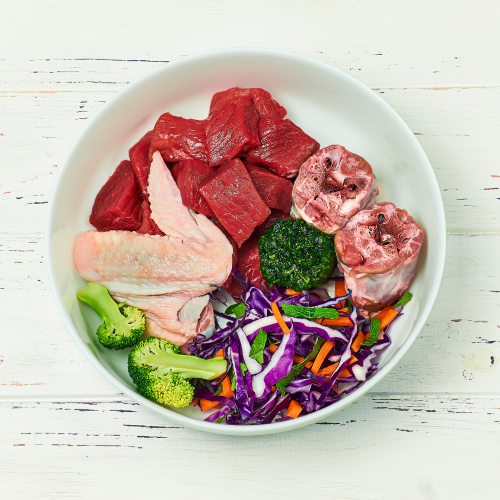
Raw feeding is one of the most hotly debated topics in the dog world. Some owners swear by it. Others avoid it completely. And in the middle of all that noise, there are a lot of myths that get repeated so often they start to sound like facts.
The truth is that raw feeding is not automatically amazing, and it is not automatically terrible either. Like any feeding method, it can be done well or badly. The problem is that many owners are sold a very simplified version of raw feeding — one that makes it sound far easier, safer, and more universally beneficial than it really is.
As a canine nutritionist, I am not interested in turning dog food into a belief system. I am interested in whether a diet is appropriate, balanced, practical, and suitable for the individual dog in front of me.
So, if you are feeding raw, considering raw, or simply trying to make sense of the claims online, here are 10 of the most common raw feeding myths dog owners should be aware of.
1. Raw feeding will stop allergies
This is one of the biggest myths I see online.
Raw feeding is often marketed as the answer for itchy skin, chronic ear infections, paw chewing, bum scooting, and digestive upset. But raw is not a cure for allergies.
Many dogs with ongoing itchiness do not have food allergies at all. They may have environmental allergies instead, such as pollen, grass, moulds, or dust mites. Changing the format of the diet does not automatically fix that.
Even when a dog does react to food, raw is not magically safer. If the dog is sensitive to chicken, beef, dairy, or another ingredient, they can still react to that ingredient in raw form.
Sometimes owners switch to raw and notice short-term improvement, but that does not necessarily prove raw itself was the answer. It may simply mean the offending ingredient was removed, treats were cut out, or the dog is now being fed more consistently.
If your dog is itchy, chewing their feet, or struggling with recurring flare-ups, it is worth reading why is my dog biting their paws alongside any content you have on food reactions or environmental triggers.
The key point? Raw feeding does not “stop allergies.” It may help in some cases if it removes a trigger, but it is not a cure-all.
2. All you need to do is rotate proteins
This sounds sensible, but it is far too simplistic.
Many owners are told that if they rotate between beef, lamb, duck, venison, turkey, and other proteins, the diet will somehow “balance itself out” over time.
But variety is not the same thing as balance.
Changing the meat source does not guarantee your dog is getting the right levels of calcium, zinc, iodine, manganese, copper, vitamin D, vitamin E, and essential fatty acids. A diet can look varied in the freezer and still be nutritionally incomplete.
In some cases, owners are rotating between several versions of the same unbalanced feeding model. So instead of feeding one incomplete diet, they are feeding five.
Protein rotation can have its place, but it should never be confused with proper formulation. This is exactly why broader feeding education, such as what should I feed my dog?, is often far more helpful than simply switching between meats and hoping for the best.
3. 80:10:10 is complete and balanced
This is one of the most common raw feeding myths of all.
The 80:10:10 model generally refers to 80% muscle meat, 10% bone, and 10% organ, usually with half of that organ portion being liver. It is often treated as the gold standard in raw feeding circles.
But following an 80:10:10 ratio does not automatically make a diet complete and balanced.
This approach can still fall short in important nutrients, including:
zinc
iodine
manganese
vitamin D
vitamin E
copper in some cases
It can also become inconsistent in fat content and problematic in calcium balance if bone intake is not as precise as owners think.
A diet can look “natural” and still fail to meet nutritional requirements properly. That is especially important for puppies, seniors, pregnant dogs, and dogs being fed homemade diets long-term.
Fresh ingredients do not remove the need for proper formulation. If you want to dig deeper into where owners often go wrong, my blog on 5 common mistakes made when raw feeding your dog is a useful next read.
4. Smaller, harder stools mean the diet is healthy
This is another claim repeated all the time in raw feeding spaces.
Owners are often told that tiny stools mean the dog is using everything in the food and that this proves the diet is highly digestible and healthy.
But smaller, harder stools do not automatically mean better nutrition.
Sometimes they simply reflect:
low fibre intake
high bone content
less bulk in the diet overall
That is not always a good thing.
In fact, very hard stools can be a sign that the diet is too bone-heavy for that dog. Some dogs end up straining, becoming constipated, or passing chalky stools, and owners mistake that for success because they have been told firm poo is the goal.
Stool quality matters, but stool size alone is not a nutritional report card. Digestive signs should always be looked at in context, particularly if your dog also struggles with tummy upset, grass eating, or ongoing gut issues.
5. If the dog looks well, the diet must be working
This one catches a lot of owners out.
A dog may have a shiny coat, good energy, bright eyes, and seem perfectly well. But that does not prove the diet is balanced.
Nutritional problems do not always show up immediately. Some deficiencies and imbalances develop quietly over time, sometimes years. Others may only show up as subtle signs like recurring digestive issues, poor muscle condition, reduced resilience, or skin problems that come and go.
Owners understandably trust what they can see. If the dog looks good and enjoys the food, it feels reassuring. But visible wellness and nutritional adequacy are not the same thing.
A diet should not just be judged on how a dog looks today. It should also be judged on whether it is meeting needs consistently over time.
6. Raw feeding cleans dogs’ teeth naturally
This myth has been repeated so often that many owners now treat it as fact.
The idea is that raw meaty bones scrape teeth clean, meaning brushing is unnecessary. While chewing can provide some mechanical action, raw feeding is not a guaranteed dental care plan.
Raw-fed dogs can still develop:
plaque
tartar
gum disease
worn teeth
fractured teeth
Bones also carry their own risks depending on the size, density, and how the dog chews.
Dental health is affected by far more than whether the dog eats raw. Genetics, skull shape, breed, chewing habits, age, and current oral health all matter.
Brushing with a dog-safe toothpaste remains the gold standard for dental care. Raw bones are not a replacement for that. For more on what genuinely helps and what is mostly marketing, read dental powders and chews for dogs.
7. Dogs should eat like wolves
This is one of the most romantic myths in dog nutrition.
Yes, dogs and wolves share ancestry. But modern dogs are not wolves.
Dogs have evolved alongside humans for thousands of years. Their lifestyles, body types, lifespans, activity levels, and digestive adaptations are not the same as wild canids.
A Chihuahua, a French Bulldog, a Labrador, and a Cavalier are not simply mini wolves waiting to eat a carcass in your kitchen.
Even if they were, “wolves eat this in the wild” is not automatically a health argument. Wild animals also face starvation, injury, parasites, tooth wear, and shorter lifespans. Natural does not automatically mean optimal.
Using wolves as a marketing hook may sound powerful, but it does not replace actual canine nutrition. The same applies to many pet food claims that sound reassuring but do not stand up to scrutiny, which is something I discuss more in why vet approved dog foods, treats and supplements might not be what you think.
8. Raw food is more “natural”, so it must be better
“Natural” is one of the most overused words in pet nutrition.
It is often used as shorthand for healthier, safer, cleaner, or more species-appropriate. But natural is not a nutritional guarantee.
A raw diet can still be:
too high in bone
too high in fat
too low in fibre
inconsistent in key nutrients
poorly suited to a dog with medical issues
Likewise, a processed diet can still be balanced, practical, appropriate, and genuinely helpful.
Owners are often made to feel guilty for feeding anything that is not fresh and raw. That kind of food guilt helps nobody.
Dogs need nutrients. They do not care whether the diet sounds trendy online. If this idea of “fresh equals better” sounds familiar, you may also enjoy meat meal and animal derivative myths in dog food.
9. You do not need supplements on raw
This depends on the specific diet, but as a blanket statement, it is false.
Many homemade raw diets do need supplementation or careful support to meet requirements properly. Owners are often told that as long as they include organ meat, oily fish, eggs, and a few different proteins, the diet will naturally cover everything.
Sometimes it might cover some nutrients well. Often it does not cover all of them consistently.
Nutrients that can be difficult to provide reliably in homemade raw diets include:
iodine
zinc
manganese
vitamin E
vitamin D
Calcium can also become an issue when bone is fed inconsistently or reduced because stools are too hard.
Supplements are not a sign that the diet has failed. They are simply a tool that can help make a homemade feeding plan more complete and more consistent. The goal is not to make feeding look “pure.” The goal is to support the dog properly.
This is also why owners need to be cautious of sweeping supplement claims in general.
10. Raw feeding is always higher in protein and therefore better
More protein is not automatically better.
Protein matters, of course. Dogs need adequate protein. But a diet cannot be judged on protein percentage alone.
What matters is the full nutritional picture, including:
calorie density
fat level
fibre
digestibility
mineral balance
essential fatty acids
life stage suitability
how the dog actually tolerates the food
A very high-protein raw diet may still be too rich, too fatty, too inconsistent, or unsuitable for the dog in front of you.
Nutrition is never about one number in isolation. That is true whether you are looking at protein, fat, sodium, or any other single figure, which is why nutrient-focused education is so important.
Is raw feeding always wrong?
No — but it is not automatically right either.
That is the nuance that often gets lost.
Some dogs do well on raw diets. Some do not. Some owners can manage a properly balanced raw plan safely and consistently. Others struggle with hygiene, sourcing, cost, or balance. That does not make them a bad owner. It simply means feeding has to be realistic as well as ideal in theory.
A feeding method should not be judged by how appealing it sounds. It should be judged by whether it is safe, balanced, practical, and genuinely suitable for the individual dog.
What should owners focus on instead?
Rather than asking whether a food is raw, fresh, natural, or ancestral, owners are usually better off asking:
Is this diet complete and balanced?
Does it suit my dog’s life stage?
Is it appropriate for their health and symptoms?
Is the fat level suitable?
Is the mineral balance correct?
Can I feed this consistently and safely?
Am I relying on marketing, or actual formulation?
Those questions matter far more than whether the food comes from a freezer.
Final thoughts
Raw feeding conversations can become very tribal, very quickly. Owners are often left feeling judged, confused, or pressured into making dramatic changes because they fear they are getting it wrong.
But dog nutrition should not be built on fear.
The best feeding choice is not the one with the loudest online following. It is the one that is properly balanced, appropriate for the dog in front of you, and realistic for the owner to manage long-term.
So if you are feeding raw already, this is not a reason to panic. It is simply a reason to ask better questions. And if you are considering raw, take this as your reminder not to confuse confidence, repetition, or online popularity with nutritional accuracy.
Your dog does not need ideology. They need appropriate nutrition.
Need help making sense of your dog’s diet?
If you feel overwhelmed by conflicting advice online, you are not alone.
I help dog owners cut through the noise and make sense of what actually matters when it comes to feeding. No fear-based marketing. No food snobbery. Just practical, evidence-led support.
You may find these especially helpful:
Explore my What Should I Feed My Dog? guide for practical help choosing a suitable diet.
Grab my Can My Dog Eat That? e-book for realistic, no-nonsense support around everyday feeding questions.
Book a nutrition consult if you want tailored advice based on your dog, their symptoms, and their current diet.
Ready to make your dog’s diet feel clearer, not more confusing? Head over to The Canine Dietitian to get started.
